You may question how this is related to cars, but if you like dogs you won’t question how awesome this is. It’s some high definition video of dogs hanging their heads out of car windows. When I was in the fourth grade, my buddy told me that the reason dogs do that is because their noses are more sensitive to oxygen and it makes them high. Since this is a somewhat legitimate blog, I did some Googling to see if he was right. It turns out he was pretty close. Dogs hang their heads out of car windows not because the oxygen makes them high, but because they’re able to process all of the scent information contained in the air going by the car. Check out this article by K9 magazine for all of the details, or you can just watch these videos to see it happen.
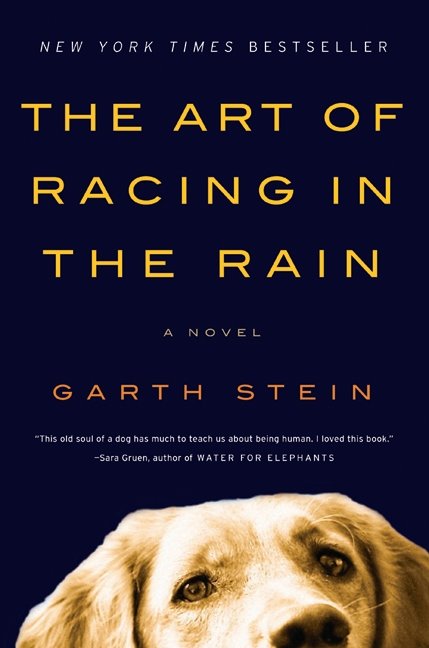
If you like this sort of thing, then you really owe it to yourself to read a book called “The Art of Racing in the Rain” by Garth Stein:
The book uses race driving as an analogy for living life. It’s also interesting because it is narrated from the perspective of the race driver’s dog. It will definitely make you laugh and cry and you don’t even have to be into cars to enjoy it. Definitely my favorite book.
This is an older video from the Best Motoring crew. They invite Tommi Makkinen to drive the Gunsai Touge (it’s a course in a motorsports park where they do hold a lot of competitions for street tuned cars). Subaru was generous enough to bring Tommi’s last championship winning car out for the bit. The guys take turns riding in the car with him to observe his technique in the snow. The last part is where Makkinen goes all out. They put a camera in the footwell to show his left foot braking technique. A lot of rally cars are setup with a strong rear brake bias that allows the drivers to initiate drifts using left foot braking.
This is a video entitled “Ride Your Passion” by French stunt rider Jorian Pnomareff. “What is stunt riding to you Jorian?” “It’s more than a sport. It’s my life. The tricks, the bike, the level, the style is unimportant. Just HAVE FUN!”
This is footage from the 2011 North American International Auto Show in Detroit. It’s the culmination of a promotion program that Ford did for the new at the time EcoBoost V6 that was going into their F-150’s. What they did was they pulled a standard EcoBoost engine off of the assembly line in their Cleveland Ohio engine plant. The engine was put on a dynamometer and put through a simulated 150,000 mile test which also included some thermal shock testing. The engine was then put into a F-150 where it was used to haul 55 tons of lumber up a mountain, tow 11,500 pounds for 24 hours straight around a track, performance hill tow testing and then its last stop was being put into a race truck that won its class in the Baja 1000. After that, the engine was taken back to Ford’s facilities in Dearborn with 164,000 total miles on it and it had only lost 1 of the 365 horsepower that it started out with. They then shipped it to the Detroit Auto Show and disassembled it for the first time in front of a live audience. The engine shows hardly any wear after the barrage of torture tests it was put through which is pretty impressive. It shows they had some talented engineers behind the engine design.
Ford is pretty ahead of the curve with this EcoBoost engine. It has a lot of the key technologies that we are going to see all car makers adopt in the near future to meet fuel mileage standards. Smaller displacement engines with turbochargers harness some of the heat energy produced by the engine to make more specific horsepower (power/liter). Direct fuel injection allows precise fuel control and better atomization in the combustion chambers. Variable valve timing changes how much the opening of the intake and exhaust valves overlap each other making sure it’s always optimized for engine speed. At higher engine speeds, the air coming into the combustion chamber is moving at a higher velocity and has more momentum. You want the intake valves to stay open longer because that momentum will keep carrying the air into the cylinder even while the piston is compressing it. The situation is different at low engine speeds when the air is moving slower. If the valves overlap too much at low speeds, the piston will actually push some of fresh air and fuel straight out of the exhaust before combustion happens. Having variable valve timing on both cams allow a computer to optimize the fuel usage and it also helps reduce turbo lag.
The video covers the entire demonstration and it runs about 50 minutes over three parts.