I picked up the RX-8 for the EV conversion (don’t worry, I’ll make a post about the car later) and I’m driving it a little to get a baseline feel for the car. One of the things that I discovered was that the space saver spare tire was not standard equipment and the car that I bought did not have one. Instead, there’s a little box in the trunk with fix-a-flat and an electric compressor. This would be a usable solution except for the car has tire pressure sensors in the tires. Filling them with fix-a-flat would destroy the sensors which are fairly expensive to replace. I happen to come across this video on plugging tires and it seems like something that can reasonably be accomplished on the road side. I think I’ll go find a kit to put in the trunk of the RX-8 just in case.
This year’s Formula 1 season has been immensely exciting to watch. The FIA introduced several new technologies that have made the racing more fan friendly. The cars still feature the Kinetic Energy Recovery System (KERS) that technically turns the cars into hybrids. Electrical energy is recovered from the wheels while the car is braking and then stored in a battery pack. The driver is then able to discharge the batteries for a certain amount of time for each lap to boost the engine’s output by 80hp. The cars this year are also running a Drag Reduction System (DRS) that allows the driver to open and stall the rear wing on the longest straight if they’re within 1 second of the car ahead of them in the detection zone. This allows the cars to be more aerodynamic and hit higher top speeds in the straightaways. The KERS combined with the DRS system has the drivers setting records for the number of passes per race.
Another interesting dimension to this year’s season is tire strategy. The FIA specifically asked Pirelli to make a tire that would not last as long so that each car would have to pit 2 to 3 times per race. This has added several dimensions to the team strategies in qualifying and during the race. Nextgen-Auto.com released this series of videos detailing the construction and tire compounds that Pirelli is providing for the Formula 1 teams this year.
Part 1:
The introduction to the series talks about the design goals set for Pirelli by the FIA. We get see some of Pirelli’s factory and R&D facilities. There’s some pretty cool footage of the different steps of the manufacturing process.
This is a quick documentary by Video Option detailing the birth of drifting and the subsequent formation of the D1 Grand Prix professional drift series in Japan.
Meet Big Bud. It’s a custom built farm tractor with a 900 horsepower 16 cylinder Detroit Diesel engine turning double 66 inch tall tires at each corner. Check out this video of Big Bud making anybody who’s ever done a tractor pull cry. It’s pulling two sleds daisy chained together AND another tractor sitting on one of the trailers. Big Bud just strolls all the way down the course LIKE A BOSS.
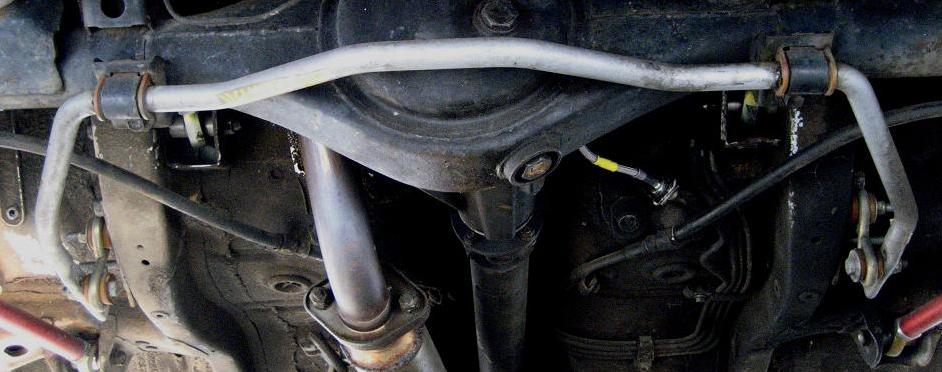
I had to do a rear anti-roll bar adjustment on my AE86 the other day, so I figured I would take pictures and do a write up on it. A lot of people overlook the role of anti-roll bars (also known as swaybars or anti-sway bars) when it comes to tuning chassis balance. You can dial in large changes in grip for the front and rear axles to compensate for the natural tendencies of the chassis you’re working with. I like to use the anti-roll bars to get the front to rear axle balance in the ballpark before fine tuning it with the damper settings on the shocks. If only damper settings are used to control body roll, the shocks will be too stiff on compression. The car’s overall grip ultimately won’t improve because it’ll start crashing over bumps and upsetting the weight of the car on the tires. Trying to tune chassis balance using only the springs and dampers is an incorrect way to implement those parts. That’s why I don’t consider an adjustable suspension setup complete until you have anti-roll bars. Continue reading →