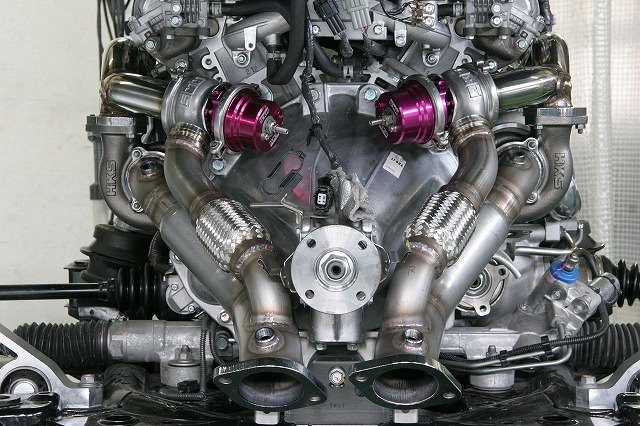
What you’re looking at is the HKS GT800R 800 hp turbo kit for the Nissan GT-R. HKS has 575 and 600 horsepower kits for the GT-R that maximize the stock turbines. This 800 horsepower kit upgrades the turbos, engine internals and fuel system. If you look closely you can see that the turbos on either side of the engine block are mirror images of each other. HKS had to design a new turbo with a reverse flow direction just for the GT-R because the engine bay was so tight. There wasn’t space for a larger turbo whose output pointed straight into the engine block on the right cylinder bank. Seems like something simple, but nobody had ever done it before. The result is the perfectly neat and symmetrical twin turbo V6 package you see above.
Check out these video interviews with the lead engineer, project engineer and engine engineer from HKS Japan. HKS Europe had the video translated, so be sure to hit the “CC” button on the bottom right next to the video quality control to turn on the English subtitles. The guys set out to increase the output of the GT-R to compete with European supercars of the likes of Porsche and Ferrari. If you’re actually in the market for an HKS turbo kit for your R35 GT-R, head over to the HKS Website for details on all of their offerings.
Believe it or not, looking at this 1,000 horsepower dragster will actually help you understand some of the new hybrid vehicle technologies currently in development. BMW and Subaru are both working on electric powered forced induction. The idea is to power a compressor for the engine air intake with an electric motor instead of exhaust gas heat like in a turbocharger or off of the engine crank like in a traditional supercharger. Turbochargers are fairly efficient because they harness the heat energy in exhaust gases that would other wise be wasted. However, their main drawback is that they are engine rev dependent. That means that they “lag” when the engine revs are too low to spool the compressor into its operating range. Superchargers solve the lag problem by powering the compressor with a belt drive attached to the engine crank. There is still a little lag, but it’s much improved over what you see in turbochargers. The problem with superchargers is that you are no longer harnessing waste energy from the exhaust. Turning the supercharger uses power from the engine that would otherwise be driving the wheels. Generally speaking, superchargers give a more useful powerband but turbochargers are more efficient and will make greater peak power.
Externally Powered Superchargers (EPS) bring together the benefits of superchargers and turbochargers. Spinning up the supercharger with something other than the car’s engine allows you to get boost at low rpm without the parasitic power losses to the engine. Using a small electric motor makes a lot of sense and there’s plenty of R&D money going into that right now. Jean Beauregard of British Columbia had a different idea. Jean owns a dragster powered by an alcohol fueled Chevy small block. It also has a roots type supercharger on top that pushes the power into the 800-900 horsepower range. Normally this is great news, but Jean figured out that the supercharger was drawing 100-150 horsepower from the engine to work. His solution was to add a gasoline powered 1100cc Harley Davidson Evolution motor to the front of his Chevy V8 just to power the supercharger. Jean calls this awesome mechanical monstrosity the Chevarley.
It turns out the Chevarley was a victim of its own success. The dual engine setup made close to 1000 horsepower which caused the car to do a fairly catastrophic wheelie. As usual with things that prove awesome to destroy themselves, Jean and his buddies were undaunted by the wreck and rebuilt it. Here is the resurrected car pulling a 5.60 eight mile run:
Obviously Jean wasn’t able to just order an off-the-shelf Chevarley kit from Summit racing. He had a brilliant and ridiculously awesome idea that he made happen. That’s the joy of being a maker/fabricator/engineer. All of us are filled with incredible ideas to make the world a better place. Don’t be afraid to put in some sweat on some tools and turn them into reality. There’s no bigger rush than bringing something like this Chevarley to life.
Often times when you speak to people about engineering, you begin to hear about two seemingly different factions: Practical and Theoretical Engineering. Many professors and industry professionals will tell young engineering students that you need experience in both camps. Why is it Practical and Theoretical Engineering can be so different? If you go to college and get a mechanical engineering degree, they will teach you engineering analysis. This is how you make an idealized mathematical model of a situation and here are the equations you need to calculate maximum loading, stress etc. This is what Theoretical Engineering consists of and an engineering degree generally means you are an expert at it.
Practical Engineering is a different story. You don’t improve your skills doing Practical Engineering in a classroom. The only way to get better at Practical Engineering is with hands-on experience building and fixing things. Where Theoretical Engineering is an analysis procedure, Practical Engineering is a creative problem solving process. The more varied types of problems you solve, the better you are at it. The key is have a repertoire of previous solutions to draw from when you are faced with something new. You could even go as far as to say that Practical Engineering draws on the creative side of your brain more so than the analytical side.
Having experience with both sides of engineering is what leads to the best design solutions. Case in point: the Freedom Leverage Chair. Amos Winter, an MIT Mechanical Engineering Student, set out to produce an all-terrain wheelchair for use in developing countries. He says something very important that I think a lot of engineering students don’t understand: The constraints drive the innovation. In order for Winter’s invention to be successful, it had to cost less than $200, be usable on rough roads yet small enough to maneuver in houses and be easily repaired by local resources. His final solution uses mass produced bicycle parts and ended up being 40% more efficient and 80% faster on rough terrain than a traditional wheelchair. It took three prototype iterations to find a working solution with the input of the end users and the technicians who would be servicing the chairs. Designing a product so simple and effective that it actually helps people and changes their lives, that’s real world engineering.
Popular Mechanics gives us an inside look at LCW Automotive Corporation as they add a 120 inch stretch to a Lincoln MKT Towncar to turn it into a Premiere Limousine. Think of it as a 20 minute episode of How It’s Made. They go pretty in-depth talking about how they get the cars from Ford ready to be cut and stretched. The new floor is steel, the side panels are bolted on aircraft aluminum and the roof is a fiberglass and foam composite. The whole process takes 45 days, adds 800 pounds of steel and 4,000 feet of wiring to the original car.
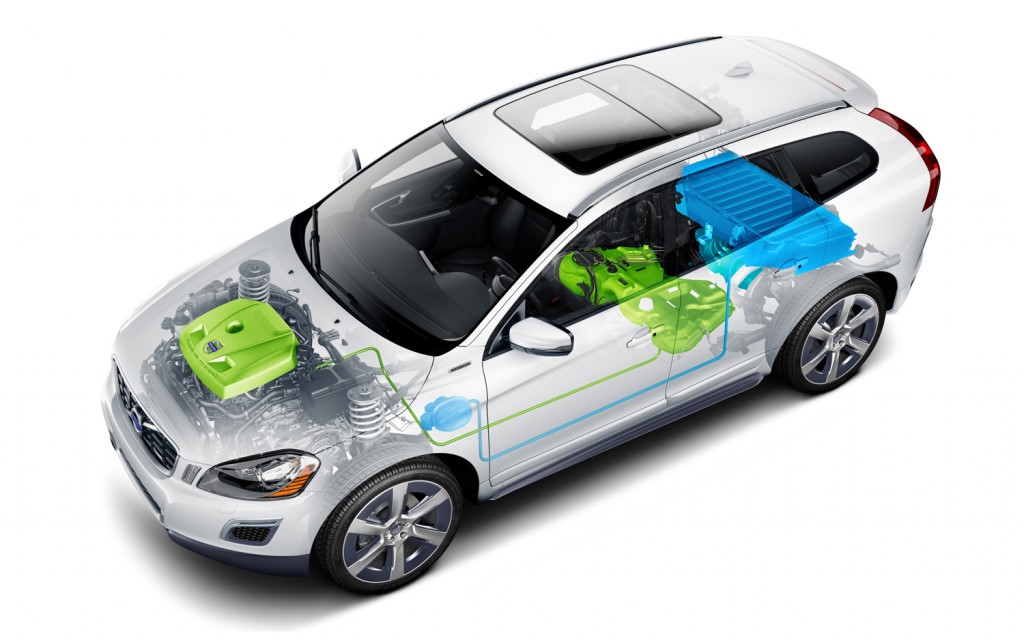
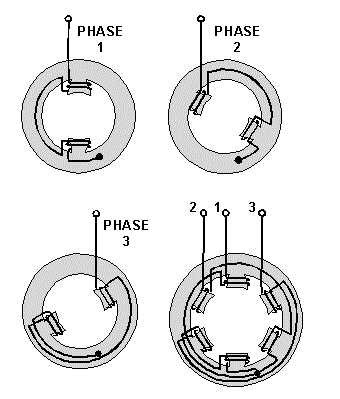
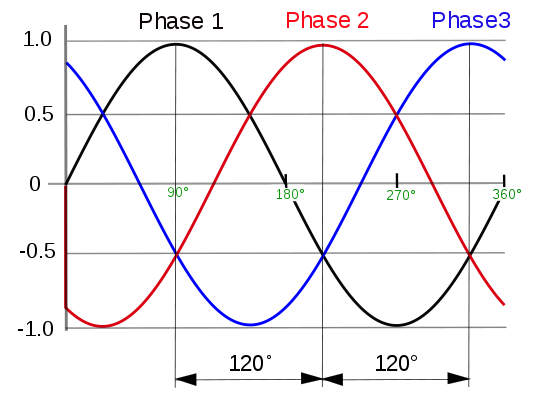
Check out this raw footage from the production line of Volvo’s V60 Plug-In Diesel Hybrid in Gothenburg, Sweden. The V60 is powered by a 2.4 liter inline-five diesel engine and a 70 horsepower electric motor. The opening shots are of some plasma cutter work on the car’s sheet metal. Special holes have to be cut for the hybrid components since the chassis is the same between the hybrid and non-hybrid cars. At 0:28, the worker is picking up the inverter for the 3 phase alternating current (AC) motor that lives in the back of the car. You can think of the 3 phases of an AC motor like the cylinder firing order of a combustion engine. The phases work in sync to induce electromagnetism to move the motor’s rotor. They can also be adjusted to reverse the direction of work to provide regenerative braking.The inverter’s job is to convert the battery pack’s direct current (DC) energy to the three phase AC power that the motor can use. 0:53 shows the actual 70 horsepower electric motor being lifted from the packaging. Note how small it is, about the size of a differential. 1:00 shows the electric motor being bolted into the rear subframe and suspension. The V60 is an E-AWD car where the diesel engine drives the front wheels and the electric motor drives the rear wheels. At 1:34 you get the first glimpse of the entire vehicle spine. Note the three orange wires that run down the center of the car. Orange is the universal color for high voltage wiring so that emergency responders don’t accidentally cut into it. The three wires running down the center of the car connect the charger and generator at the front of the car with the battery pack in the rear. The generator will essentially be a smaller 3-phase AC motor driven off of the diesel engine. That’s why you’ll pretty much always see the orange high voltage wires in groups of three (one for each phase) in any hybrid car. At 2:30 the body gets mated to the undercarriage and drivetrain. 2:45 is where we see the actual battery pack. Volvo has decided to build it into the floor of the trunk area so they wouldn’t have to modify the sheetmetal too much from the non-hybrid car. Again, the high voltage wiring is contained in orange loom. 3:03 is where we see the battery pack is dropped into the car using the nifty little rotating crane. At 3:45 I think they are filling up a separate coolant circuit for the electric motor, inverter and battery pack. The final shot is giving the battery a bit of charge so it doesn’t drain too low from internal resistance while the car is being shipped to its final location.