Mitsubishi released this video of their EV program at this year’s Pikes Peak International Hill Climb. They fielded two cars, a stock i-Miev and a tube frame i-Miev Evolution that has three motors and almost twice the output. There is footage of the i-Miev Evolution being crashed in practice. The team repaired the car and it came back to place second in the EV category and 8th overall with a 10:30.850. The stock i-Miev was the only showroom stock car to compete and finished with a 15:10.557. For reference, the Toyota P002 finished first in the EV class and 6th overall with a 10:15.380 which is less than 30 seconds off the overall record. Monster Tajima’s E-Runner DNF’ed with technical problems after running strong in practice. The P002 now owns the EV record for the Nurburgring Nordschleife and Pikes Peak.
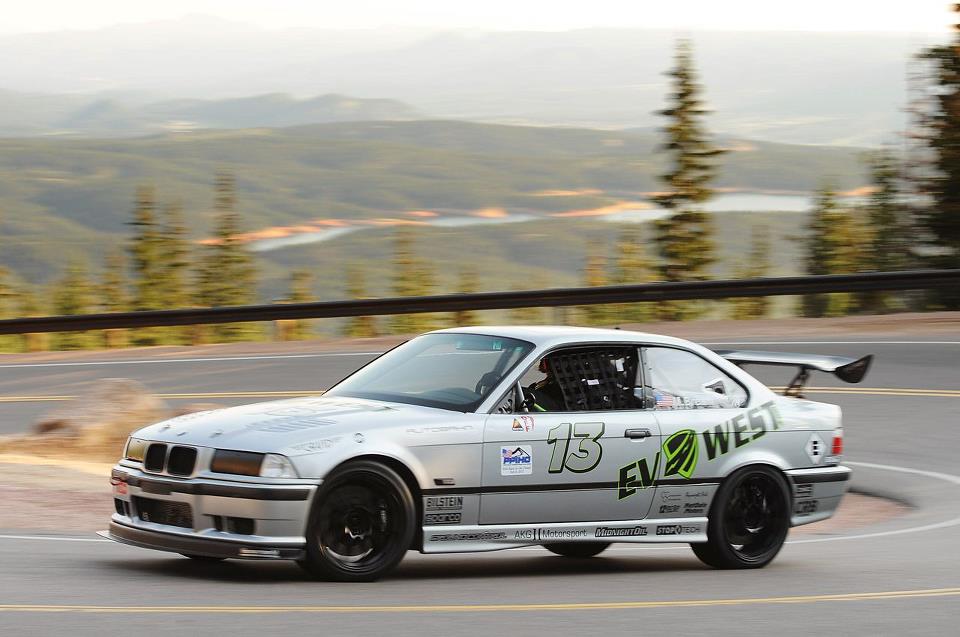
EV West just posted these videos of their 700 hp E36 M3 race car qualifying and practicing for this year’s Pikes Peak International Hill Climb (PPIHC). The course is split into three sections to allow the drivers to pre-run the course before competition day. Qualifying is done based on their time for the lower section. It turns out the car was making too much power which was causing some powerslides on corner exit. The team derated the controller to help with traction.
Part 1: Qualifying the on the lower section. The motor controller cut out for 30 seconds right off the bat, but then it fires up again without any problems. The alarm is required for electric cars so that the people out on course can hear the car coming.
The current owner of the Delorean Motor Company is in the process of developing an electric version of the DMC-12. The hope is to have turn-key cars built from their inventory of new-old-stock parts available for purchase next year for $95,000-$100,000. They’re also planning on retrofitting electric drivetrains into existing DMC-12’s. Bradley Hasemeyer of Translogic visits the DMC warehouse and test drives the DMC-EV test mule. Delorean Motor Company paired up with Epic EV for a complete battery, motor and charger package. The prototype car has a basic brushed DC motor, but the production version is slated to have a 400V AC induction motor that produces 260 horsepower and 360 ft-lbs of torque. There’s also some bonus footage of the new chassis that Epic helped DMC make with the original molds. Instead of hand laid fiberglass, they are now using vacuum bags and honeycomb reinforcement to make a lighter and stronger chassis.
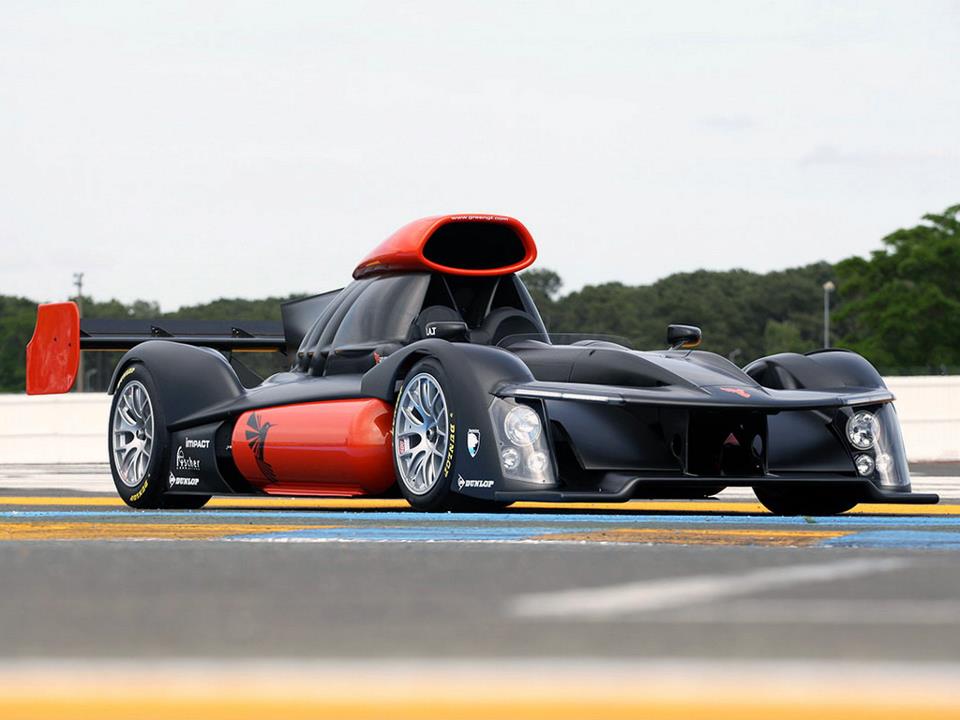
I posted this picture of the GreenGT H2 on the Flux Auto Facebook page and got a question about the details of the car and how hydrogen fuel cells work. This post will address all of those things. Lets start with the car. The H2 is made by a French vehicle R&D company called GreenGT. It will be racing in the 24 hours of Le Mans next year in the Garage 56 experimental car exhibition spot that was occupied by the Nissan DeltaWing this year. The chassis of the car is made by Welter Racing and their are two electric motors that produce 540 horsepower to drive the wheels to a top speed of 186 mph. The interesting part H2 comes from the energy storage system. The orange tanks on the side of the car hold enough hydrogen gas to power the car for 40 minutes at a time. The H2 has a high temperature Proton Exchange Membrane Fuel Cell (PEMFC) that produces 340 kw. To be more specific, the car carries 18 combined cells that produce 20 kw each with one functioning as a backup. The science behind fuel cells is that a semi-permeable membrane separates hydrogen gas and oxygen. This membrane only allows protons to pass through it. What happens is the electrons and the protons from the hydrogen gas split up. The protons pass through the membrane and bond with the oxygen to form water. The electrons travel down the membrane to be used as electrical energy. Here’s a video illustrating the chemistry:
The theory behind fuel cells is sound (i.e. they actually work), but practical implementation is still lacking. Currently they are only a little more efficient than combustion engines even though they come in a much bulkier package. Harvesting, transporting and storing hydrogen also presents it’s own set of problems. The general public tends to associate hydrogen with the Hindenburg and seem to think it’s an explosion hazard(the same was said about gasoline when we switched from steam powered cars). In reality, a hydrogen leak is actually safer than a gasoline leak. Hydrogen gas dissipates extremely quickly since the molecules are so light. You will lose the gas before it has a chance to detonate which is a lot safer than liquid gasoline pooling up under a leak. The quick dissipation of hydrogen gas is also what makes it difficult to store. Since it’s the smallest atom, it tends to find its way through other materials. Fuel Cells are a clean way of producing energy but face similar R&D barriers as the rest of the green industry.
My friend J sent me this video. It’s the story of a young boy named Evan and his Lightning McQueen PowerWheels. Evan drove the car for 3 years before wearing out the plastic wheels. Evan’s father then decided to give Lightning McQueen an overhaul. He welded in an aluminum frame to mount a 2/3 hp electric motor and pneumatic tires so Evan could drive around a dirt oval track.