The Hossack 2-Stroke Engine


The Kneeslider
just posted this article about a new type of 2-stroke engine that is under development. The Kossack engine uses the same rotating assembly as a standard engine, but the piston and combustion chamber have a rectangular cross section. There’s also no wrist pin between the piston and connecting rod. This means the piston and connecting rod can be made lighter and simpler. The Kossack engine can improve 2-stroke efficiency by up to 30 percent by providing better control over intake and exhaust overlap. Head over to the full article on The Kneeslider site for a lot more details and videos of an engine model and the prototype running.

Gazoo Racing Twin Charges the Toyota FT-86

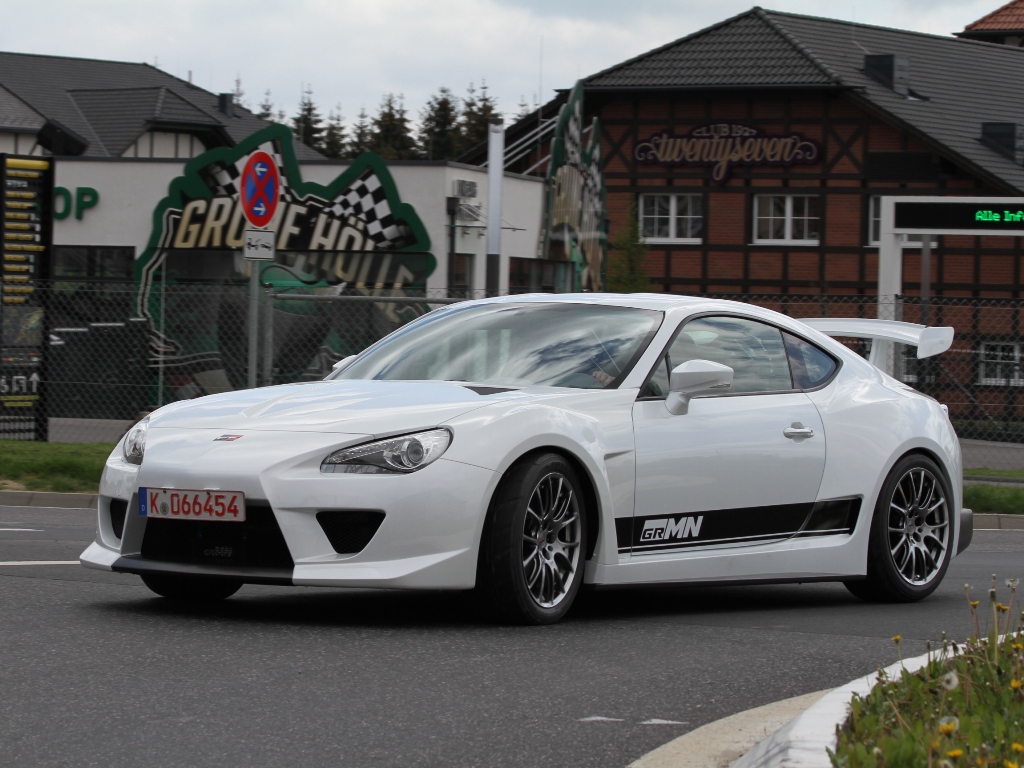
Gazoo Racing is Toyota’s factory backed tuning company. Some of their previous projects include a supercharged 6-speed iQ and a hybrid sports MR-S. They’ve just released news of a twin charged GT-86 / Scion FR-S / Subaru BRZ. Twin charged means that the engine has both a supercharger and a turbocharger. The supercharger boosts the engine while it’s still at low rpm’s and then the turbocharger takes over once it’s spooled up at high rpm. Generally speaking, this allows the use of a larger turbocharger since you don’t have to worry about turbo lag. The Toyota engineers went with the boxer engine layout for this car because it was the only way to get the sporty look of a low hood line, but it eliminated the possibility of AWD (no room for a front diff under the engine) for Subaru and didn’t leave space for a large air to air intercooler in front of the radiator. That’s why news of this twin charged car comes as a bit of a surprise. I think there was enough complaints about low power from the media reviews of the car to warrant them breaking a few traditions to make this happen. A closer look at the engine bay reveals a few interesting things.

  1. The air enters the system through the intake box where there’s a stock style panel filter. The air moves through the black plastic pipe to the supercharger behind the engine.
  2. This looks to be a roots type supercharger that is driven by a shaft that runs across the top of the engine to the belt system at the front. The cylindrical cover directly under the number 2 hides the shaft. It looks like the pulley that drives the supercharger is peeking out from behind the blue coupling on the air box. The red pipe above the number 2 is the output of the supercharger where the air leaves after it’s been compressed.
  3. If you follow the red pipe out of the supercharger, it drops down into the corner of the engine bay where the turbocharger is hiding. The turbocharger isn’t visible, but if you look carefully you can see another red pipe behind the one that connects the supercharger and turbocharger. This is where the air leaves the turbocharger after it’s been compressed.
  4. The large aluminum box against the firewall is the air to water intercooler that cools the compressed intake air. The coolant used is piped to a radiator in the front of the car. The radiator for the air to water intercooler is smaller than an equivalent air to air intercooler making it easier to package in the front end.
  5. This is where the air enters the intake manifold for the engine. The stock intake manifold would normally go where the shaft for the supercharger is. They must have designed a new one for this application.

The press release says the car develops 320 horsepower as well as having an aero kit, staggered 18″ wheels and a rollbar. The fact that it was prototyped by Gazoo means that there may be a possibility or seeing a production version of this car. At the very least Toyota felt there was enough of a demand for a higher power version of the FT-86 to build this car and gauge the demand for it. Head over to the FT-86 Club to look at a lot more high resolution pictures, specs and the full press release.

Source: FT-86 Club

Build Your Own LS7 or LS9

When you buy a new Corvette Z06 or ZR-1 or crate engines of the LS7 or LS9, you have the option of paying $5800 to build your own engine at the GM Performance Build Center in Wixom, Michigan. You go to the plant and use the GM parts, tools and processes under the guidance of a GM technician. Stacey David recently did this to build the LS7 going into the latest project car that’s building for his show Gearz on SPEED. Lucky for us, they brought cameras along.


Source: Gearz on YouTube

Trackside with American Le Mans at Laguna Seca

The Drive Channel released another video of what I call Motorsport Music. There’s no commentary, it’s just the natural sounds of racing. It starts in the morning with the teams and crews preparing for the start of the race and then goes to various parts along the track to watch the cars go by. There’s even a few shots of the famed Corkscrew. It makes for great background music while you work.


Source: Drive on YouTube

Project Sea Lion

I will admit that I thought this was going to be stupid when I first clicked on it. Most home built amphibious vehicles are pretty awkward, but this one is actually cool enough to make a post about. This is the Sea Lion. It’s a transformable single seat car that was built to take on the Amphibious Vehicle World Speed Record. The chassis is a TIG welded 5052 aluminum monocoque and it’s powered by a turbocharged Mazda 13b rotary engine that draws air in through a side-draft carburetor. The engine makes 174 horsepower which allows the Sea Lion to go 125 mph on land and 45 mph on water. The front end transforms  when the Sea Lion hits the water and the side pods are for storage and flotation. Here’s some video of it in action:


The Sea Lion is currently for sale for $259,500. The owner states that its ready for an engine upgrade to the Renesis engine from an RX-8 to take the speed record. Head over to Fantasy Junction to see the ad and lots of high resolution pictures.

Source: Fantasy Junction via Autoblog