Porsche Carrera 3.2 Teardown

Check out this stop motion video of an air-cooled 3.2 liter Porsche flat-6 taking itself apart. The people who made it originally shot 4000 pictures which turned into an 8 minute video. They felt that was too long so it was simplified to 1500 pictures over 3 minutes. Part 2 of the video is going to showcase the machining work that is going to punch this engine out to larger displacement and should be ready in the fall.


Source: Filmkooperation on YouTube via BANGshift.com

Tesla Model S Assembly Line

WIRED Magazine got this inside look at the assembly line that build the Tesla Model S. The plant is a former joint venture from Toyota and GM that didn’t work out. What makes the Tesla format interesting is their extensive use of robotic arms from German robotics manufacturer, Kuka. As seen in the video, the robots can be programmed with complex movement paths and are capable of changing tooling for different tasks. You could almost say it was rapid prototyping manufacturing. If this factory suddenly needed to produce Tesla’s next model, the robots wouldn’t need to be switched out just reprogrammed. This gives Tesla flexible manufacturing that can more easily follow market demand for their products and extends the life cycle of the machinery beyond that of the cars they started working on.


Source: WIRED on YouTube

1965 Chevrolet Mid-Engine V8 Crown Corvair

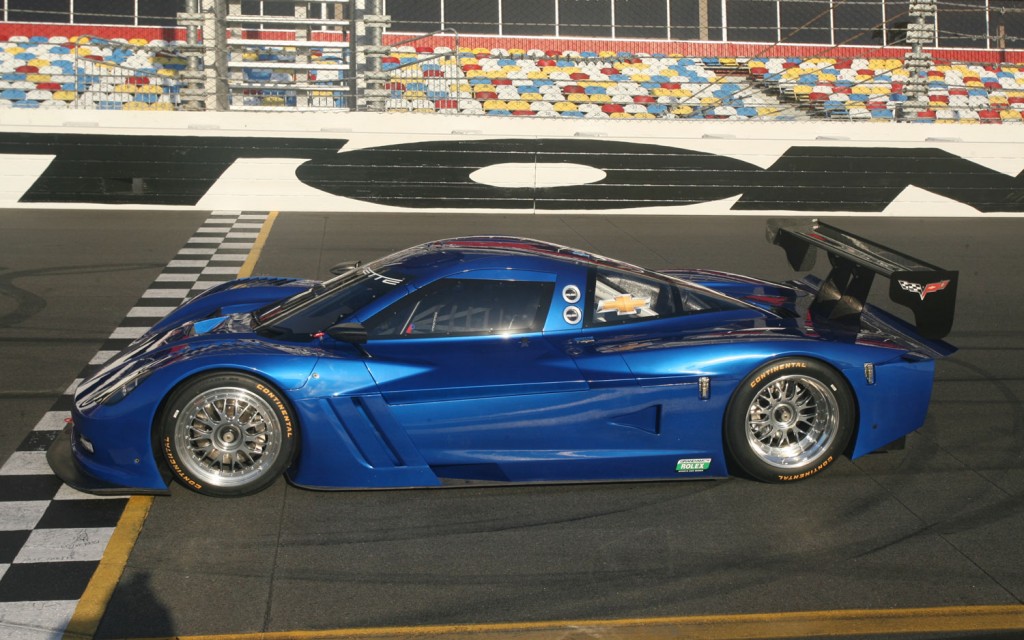
Mike Musto and Big Muscle are back on the DRIVE YouTube channel for another season. Here they are with an interesting 1965 Chevrolet Crown Corvair built by Chuck Rust in his garage. The Corvair’s original rear mounted inline-6 has been swapped out for a mid-mounted 310 horsepower, 283 cubic inch V8 which now where the rear seats used to be. This isn’t a traditional muscle car in that it doesn’t make huge power for straight line drag racing and that’s not a bad thing. Chuck’s goal was to make a car with balanced handling and a responsive, high revving engine. I think the car is awesome because it challenges the traditional shortcomings of muscle cars and it proves that you can build whatever you 2012-Chevy-Corvette-Daytona-Prototype-Side-1024x640 via Automobile Magazinecan imagine on a reasonable budget. Frustrated that Chevrolet won’t build a mid-engine Corvette outside of a Daytona Prototype? No problem, you can probably build a car like this for cheaper than a new Corvette. A mid-engine architecture creates the best weight distribution for road racing cars, but is a hard sell for mass-produced consumer cars. That’s why you can’t buy a new one that’s not some impractical, high price exotic. Chuck doesn’t care about all that. He knows how a V8 powered mid engine car handles because he drives the crap out of the one he built everyday.


Source: DRIVE on YouTube

Complete Coach Works Electric Bus Conversion

Complete Coach Works drops by Jay Leno’s garage to talk about their electric bus conversions. Just like I advocate here on Flux Auto, there is a huge opportunity to give our existing vehicle fleet a new lease on life with electric vehicle conversions. These guys purchase buses at the end of the useful life cycle of their combustion based drivetrains instead of letting them go to the junkyard or crusher to be recycled for scrap. The buses are then refurbished with a 360 volt AC motor and over 200 kilowatt-hours of lithium ion batteries giving it a 90 mile range. The performance is tested and documented before the buses are ready for another decade of useful service.

We’re all familiar with the phrase “Recycle, Reduce and Reuse.” That’s actually incorrect when you consider the energy and consumption of products through their entire life cycle of being harvested as raw materials, manufactured into a useful product, used up by the consumer and then disposed of. The priorities should be shifted to “Reduce, Reuse and Recycle.” Converting cars with dead engines to EV’s is a powerful way to do this.


Source: Jay Leno’s Garage on YouTube