
Why Build an Electric Car? Part 3: Nissan Leaf and Chevrolet Volt

Here’s a hypothetical situation that hopefully doesn’t seem too outlandish. Lets say you’re a young professional who is making good money and are looking to reward yourself by buying a new car. You’ve been a car guy/girl your whole life, so you want something sporty that’s nicer than an economy car with aftermarket coilovers. Lets take it one step farther and say you’re also very intelligent and socially aware, so you know what we’ve covered in Part 1 and Part 2 of why we should consider driving electric cars and you’d like to find personal transportation that’s not motivated by the combustion of fossil fuels.

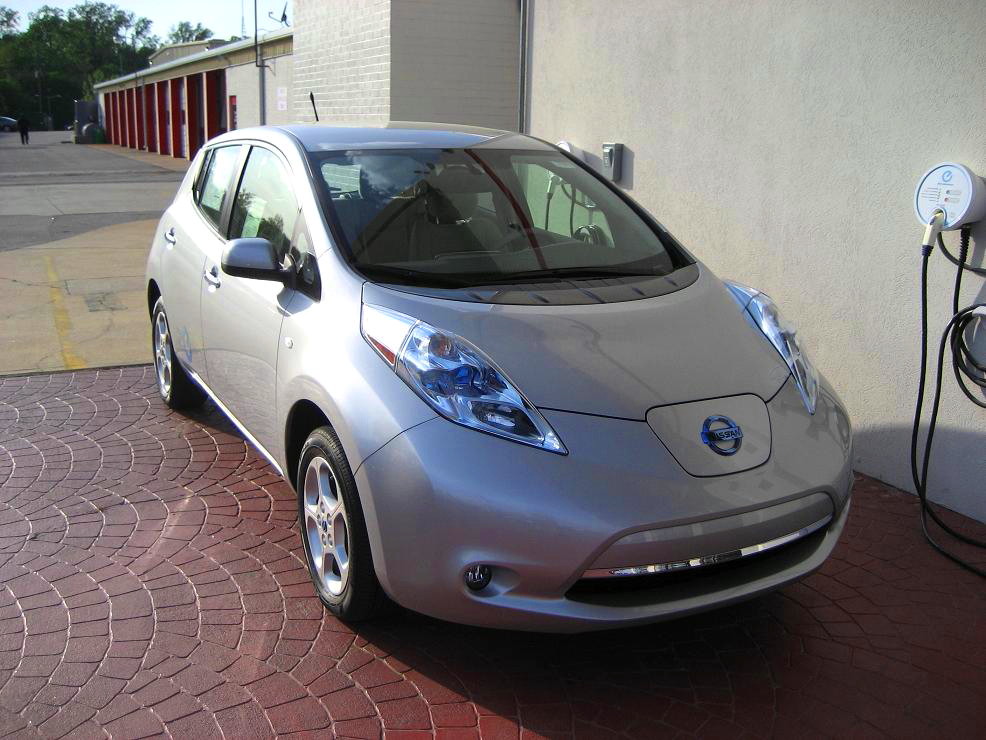
Where does that leave you? As of this writing, there are two middle class affordable mass production electric cars available for purchase at a dealership: the Nissan Leaf and the Chevy Volt. I went to my local dealerships as our hypothetical car shopper to see what the buying experience for these electric cars would be like. I wanted to find out about the stuff that went beyond the sales brochure. How much did all the options add to the base price of the car? What kind of maintenance intervals would they have? What are the charger options? What kind of work can I do to the car myself? Most importantly, how well did these dealerships actually know these electric cars? Here’s how our hypothetical car buyer’s shopping day turned out. Just as a note: we’ll be discussing the price of these cars without government subsidies simply because they won’t always be available and because EV’s will have to compete on even ground with regular cars if they’re going to penetrate the US market.

Nissan Leaf
Continue reading

The Lingenfelter Collection – Big Muscle

Big Muscle brings us an inside look at Ken Lingenfelter and his wonderful collection of cars. Lingenfelter Performance Engineering made it’s name in building high performance versions of the Chevrolet Corvettes and Camaros. Their success lies in their ability to create cars capable of delivering super car performance with daily car reliability. Ken Ligenfelter built this collection of cars to share with other car guys and to raise money for charity. The collection includes the Duntov Corvette, GM’s first V8 Corvette test mule that was reunited with it’s original engine after they were separated for 47 years. They also let the host of the show test drive the 610 hp 1993 Ligenfelter ZR-1 widebody.


Source: DRIVE on YouTube

Motor Trend Drag Race: GT-R vs. Z06 vs. GT500

I came across another one of Motor Trend’s random gratuitous drag races. This is the 2012 Nissan GT-R vs. the 2011 Chevrolet Corvette Z06 vs. the 2011 Ford Mustang Shelby GT500. One of the interesting stats to note is that the Corvette is the only car without forced induction, but weighs in under 3300 pounds while the other two are north of 3800. Enjoy:

Source: Motor Trend on YouTube

Build Your Own LS7 or LS9

When you buy a new Corvette Z06 or ZR-1 or crate engines of the LS7 or LS9, you have the option of paying $5800 to build your own engine at the GM Performance Build Center in Wixom, Michigan. You go to the plant and use the GM parts, tools and processes under the guidance of a GM technician. Stacey David recently did this to build the LS7 going into the latest project car that’s building for his show Gearz on SPEED. Lucky for us, they brought cameras along.


Source: Gearz on YouTube