
Why Build an Electric Car? Part 3: Nissan Leaf and Chevrolet Volt

Here’s a hypothetical situation that hopefully doesn’t seem too outlandish. Lets say you’re a young professional who is making good money and are looking to reward yourself by buying a new car. You’ve been a car guy/girl your whole life, so you want something sporty that’s nicer than an economy car with aftermarket coilovers. Lets take it one step farther and say you’re also very intelligent and socially aware, so you know what we’ve covered in Part 1 and Part 2 of why we should consider driving electric cars and you’d like to find personal transportation that’s not motivated by the combustion of fossil fuels.

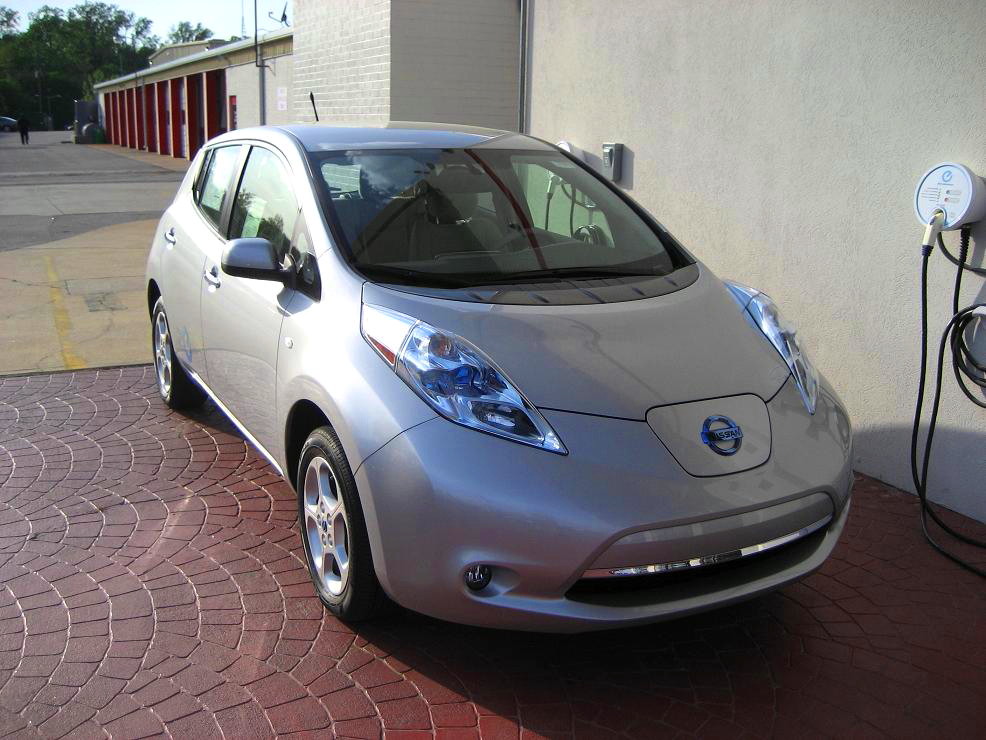
Where does that leave you? As of this writing, there are two middle class affordable mass production electric cars available for purchase at a dealership: the Nissan Leaf and the Chevy Volt. I went to my local dealerships as our hypothetical car shopper to see what the buying experience for these electric cars would be like. I wanted to find out about the stuff that went beyond the sales brochure. How much did all the options add to the base price of the car? What kind of maintenance intervals would they have? What are the charger options? What kind of work can I do to the car myself? Most importantly, how well did these dealerships actually know these electric cars? Here’s how our hypothetical car buyer’s shopping day turned out. Just as a note: we’ll be discussing the price of these cars without government subsidies simply because they won’t always be available and because EV’s will have to compete on even ground with regular cars if they’re going to penetrate the US market.

Nissan Leaf
Continue reading

Nissan GT-R’s at the 24 Hours of Nurburgring

Nissan put together this video highlighting the experience of all of the teams that ran Nissan GT-R’s at the 24 hours of Nurburgring. Interviews include the head of the GT-R project, professional race drivers and a couple of drivers who made it to the professional level from the Gran Turismo Academy. They also talk a lot about how the things they learned during the brutal conditions of racing go into building a better road car for their customers.


Source: Nissan Newsroom on YouTube

2012 Le Mans 24 Debrief – DRIVE

I normally don’t like to post these Shakedown videos of the guys just sitting and chatting, but this one has a lot of interesting news that’s relevant to what we’re about here at Flux Auto. This episode revolves around the 2012 Le Mans 24 hour race that just finished up. Leo talks about how the Toyota TS030 and Audi E-Tron Quattro did as well as the future of the Nissan DeltaWing which was knocked out of the race by a driver who claimed he couldn’t see it in his mirrors. There’s also news about engine restrictions, energy consumption and hybrid drive trains for the race next year. The last part is an interesting bit of news regarding Mazda’s announcement that they were producing Skyactiv diesel engines for P2 cars next year as well. I’m glad to see that the movement to develop fuel efficient performance cars in racing is so strong. Racing breeds strong innovation.


Source: DRIVE on YouTube

Satoshi Motoyama Tries to Get the Nissan Deltawing Back on Track

The Nissan DeltaWing competed in this year’s 24 hours of Le Mans as the single experimental class showcase car. It took to the track after three and a half years of independent development. The DeltaWing had a universal unstoppable underdog appeal that quickly made it a fan favorite. Unfortunately it was taken out of the race by Kazuki Nakajimi in one of the Toyota TS030’s while he was challenging for the race lead. Nissan factory driver, Satoshi Mototayama, was at the helm when the DeltaWing was forced into a concrete wall. Le Mans rules allows the driver to get out of the car as long as he stays within a short distance of it. Motoyama tried for two hours to get the car back on track before giving up in tears with the fans all applauding his efforts. The damage to the drive train was too severe for him to get the car running again and back to the garage. That ends the DeltaWing’s story at Le Mans, but hopefully we’ll hear from it again.


Here is Motoyama’s interview with the press after the crash:

Sources: Nissan Europe and Nissan Newsroom

The Nissan DeltaWing Takes to the Track at Le Mans 2012

Nissan Europe released this video to give a behind the scenes look at the development of the Nissan DeltaWing. The premise of the car is that it has half the weight and aerodynamic drag of a traditional race car and thus requires half the power and fuel consumption. The car’s center of gravity is very near the rear axle which is why the front tires are so skinny. The car was originally submitted for consideration to be the new chassis for Indy car racing but was passed over for something more traditional. New sponsors picked up the design to run as an exhibition vehicle in this year’s 24 hours of Le Mans. Nissan decided to back a large portion of the project by providing a 1.6 liter turbocharged I4 engine related to the one found in the Nissan Juke. After 3.5 years of development, the team and the car arrived at Le Mans and took their first shakedown laps.


Source: Nissan Europe