Urban Arrow E-Assist Cargo Bicycle

I’ve found the rise of the urban mobility trend to be a very fascinating one to follow. The idea is that owning, storing and operating a car in a crowded city is pretty impractical. You need something smaller and more nimble to get you places faster and more efficiently than walking. Clean emissions is an obvious plus and limited range is acceptable since everything is packed so closely in the city. This new vehicle genre covers everything smaller than cars and more powerful than a pair of shoes or a traditional bicycle. The lack of rigid definitions and traditions have led to a lot of creative solutions for the urban commuter. You could say that the urban mobility movement started with the Segway and has continued to grow as more and more companies have realized the untapped potential of this market segment. We’re beginning to see some serious R&D budgets put into electric-assisted bicycles and skateboards as well as premium electric scooters. The compact vehicle sizes, modest range requirements and tech-savvy customers have thankfully made electric power the future of urban mobility.

I came across this e-assist modular cargo bike on Gizmag.com yesterday. It’s by a Dutch company called Urban Arrow:
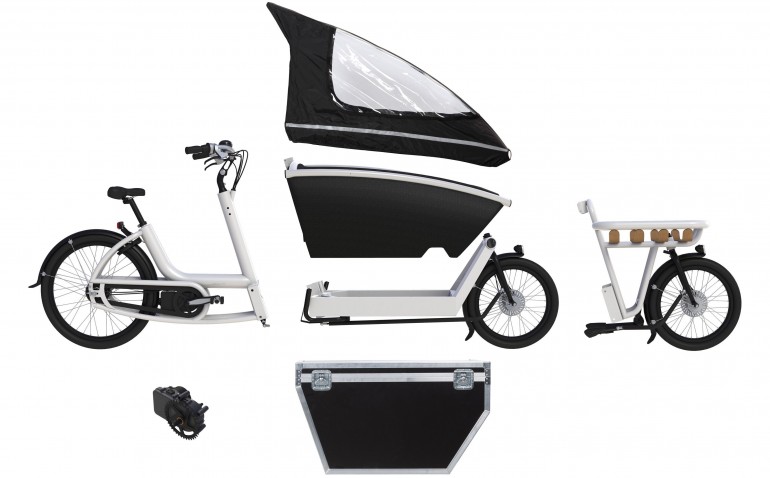
The front cargo bin is padded with an optional weather canopy so children or one of your lazy buddies can ride in it. There’s also an optional locking hardcase for transporting valuable or fragile items. The frame is designed to hold up to 240 pounds of cargo. The front end of the Urban Arrow can be swapped for a short wheelbase version that has more of a traditionally sized luggage basket. Here’s some Dutch video of it in action:


Urban Arrow Photoshoot
from Eelke Dekker on Vimeo.

Continue reading
How it Works: Audi R18 e-tron Quattro Hybrid

This is a pretty well done animation showing how some of the systems work on the Audi R18 e-tron Quattro diesel hybrid that won this year’s 24 hours of Le Mans. It uses the next iteration of the electromagnetic flywheel energy storage system that was first pioneered on the Porsche 911 GT3 RS Hybrid endurance racer. The energy from the regenerative braking is used to spin a flywheel up to 40,000 rpm in a vacuum. The Le Mans rules only allowed the team to power one of the axles with the electric motors. In the R18, a diesel engine powers the rear wheels and the electric motors drive the front wheels during boost mode.


Source: YouTube user tsport100

2012 Pikes Peak EV Comparison – What Could Have Been

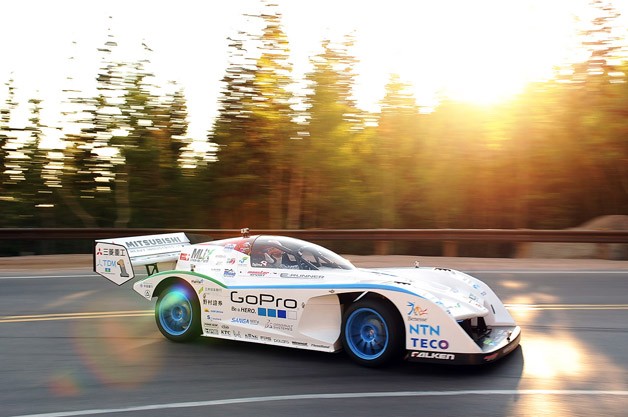
The last of the coverage from this year’s Pikes Peak International Hill Climb is still trickling in. I came across a couple of videos of the Toyota Motorsports Group EV P002 and Monster Tajima’s E-Runner that presented a nice opportunity to do a side by side comparison. What makes this interesting is that the E-Runner DNF’ed due to technical failure, but was dominating the EV class during practice. Nobuhiro “Monster” Tajima beat Fumio Nutahara in the Toyota by almost 13 seconds on the 5.16 mile lower section of the course during qualifying. Tajima had set up the E-Runner with a mixed tarmac and gravel suspension settings on the first day because he was expecting a lot of gravel to be pulled onto the road surface from the side of the road which never happened. Monster switched to a faster pure tarmac setup for the later practice runs on the middle and top sections of the course. Nutahara won the EV class in the TMG EV P002 on race day and was less than 30 seconds off of the overall record set by Rhys Millen in his Formula D car. Monster Tajima DNF’ed with a motor failure, but what if he had been able to finish? Would he have been in contention to defend his overall record? After watching these two videos, I think he could have done it. This is footage of both the Toyota Motorsports Group EV P002 and Monster Tajima’s E-Runner on the top section of the course on the last day of practice before race day. Identical course and conditions make this an excellent comparison of speed. The two cars aren’t worlds apart, but the E-Runner is visibly faster and seems more stable. I think it definitely would have been within the realm of possibility for the E-Runner to pull a 30 second gap on the Toyota over the length of the 12.42 mile course. Hopefully Monster Tajima can get the kinks worked out for the race next year and put an EV on top of the overall podium.

Video 1: Fumio Nutahara in the Toyota Motorsports Group EV P002 practice run on the top section of the Pikes Peak International Hill Climb 2012.


Video 2: Monster Tajima in the E-Runner on the same course on the same day:


Sources: Technologic Vehicles and GoPro on YouTube.

Monster Tajima at the 2012 Pikes Peak International Hill Climb

Nobuhiro “Monster” Tajima was the defending race winner coming into the 2012 Pikes Peak International Hill Climb having set the overall record last year while the course was still part tarmac and part gravel. 2012 marks the first year where the entire course has been paved. Monster and Team APEV of Japan built a new car called the E-Runner which is tarmac specific and electric powered. Though Team APEV did the engineering and fabrication on the E-Runner, Monster Tajima promotes the use of electric race cars in Japan with his own EV company called Tajima Natural Energy. Monster qualified first in the EV category by a large margin using a mixed gravel and tarmac suspension setup. Tajima had anticipated that a lot of dirt from the side of the track would be dragged onto the road surface but changed to a tarmac specific setup when he saw the course stayed clean during practice. Many people thought he would set the new overall record in an electric vehicle. Here is video of his qualifying run from Day 1 of practice on the lower section of the course:


Continue reading

WSJ on A123’s Chinese Investors

Link

The Wall Street Journal posted a pretty interesting article about American lithium-ion EV battery producers, A123, being rescued by Chinese investors. A123 was a startup based on MIT students and professors. They got money from the US Government and the state of Michigan and started producing batteries for a few manufacturers including Fisker and the upcoming Chevy Spark EV. A123 was on the verge of bankruptcy after having to recall the batteries in the Fisker Karma and the US government was unwilling to loan them any more money.

China Deal to Axquire US Battery Maker is Just the Beginning – WSJ